
Today, we are taking a look at yet another trading platform created “for higher trading standards.” However, as it turns out, the platform does not even appear to meet the standards established in the industry, and traders are most likely being lured into yet another scam project. At least, this is the impression we got while analyzing this broker’s offerings, and that is exactly what we will discuss in our HighMarkets review.
Contents
- Key Points to Know
- What Stands Out About the Bxbmarket.com Website
- Inside the Offshore Registration of HighMarkets
- Trading Conditions Explained
- Checking Compliance with Legitimate Rules
- How Long Has HighMarkets Been Around?
- Platform and Support Overview
- Online Reputation: What We Found
- Conclusion: Risks and Reliability of HighMarkets
- Sources
Key Points to Know
| Main Website | https://www.highmarkets.com/ |
| Additional Domains | Not Found |
| Online Since | 2022/04/03 |
| Legal Entity Name | DXA SEYCHELLES LIMITED |
| Pretended to Be Regulated | Seychelles FSA |
| Fact-Checked Regulation | Seychelles FSA |
| Deposit to Start Trade | Unspecified |
| Leverage up To | 1:200 |
| Spreads From | Unknown |
What Stands Out About the Bxbmarket.com Website
-
Data from official registers confirms the company’s registration and the fact that it holds an FSA of Seychelles license.
-
The website’s pages are technically well-optimized and load relatively quickly.
-
The company operates under an offshore license; however, the level of protection provided for client funds and investor rights does not allow us to consider trading with this broker safe.
-
Leverage of up to 1:200 creates a high level of risk for retail clients, while the lack of clear information about spreads makes it impossible to objectively assess trading costs and potential returns.
-
The trading terminal does not meet the quality standards established in the industry and falls significantly short of the most popular trading platforms.
-
There are no reviews from former or current clients of the broker available online, while expert ratings on specialized websites are extremely negative.
Inside the Offshore Registration of HighMarkets
The FSA of Seychelles license is indeed a recognized regulatory authorization. However, the mere fact that a broker holds such a license is not enough to put it on the same level as companies supervised by Tier 1 regulators. In the informal international classification, the Seychelles regulator is generally considered a Tier 2 regulator. For clients, this means one important thing: the license confirms that the broker is registered and formally operates under the supervision of a government authority, but the level of investor protection and financial stability requirements is noticeably lower than the standards imposed by leading financial market regulators.
For comparison, it is enough to look at the FCA in the United Kingdom, ASIC in Australia, or CySEC in Cyprus. Companies operating under the supervision of these regulators face much stricter requirements regarding capital, reporting, business organization, and client protection. Therefore, the Seychelles license itself should be viewed primarily as confirmation of a company’s legal status rather than a guarantee of a high level of reliability.
Overall, the stability of any broker operating under an FSA of Seychelles license should be assessed across several key areas:
- Capital requirements. The FSA imposes a relatively low minimum capital requirement on licensed companies. For the Securities Dealer category, taking into account the amendments adopted in 2024 (Securities (Amendment) Act 2024), the minimum requirement is $100,000. Compare this with the requirements imposed by Tier 1 regulators: the FCA requires approximately $730,000, while ASIC requires around AUD 1,000,000. Such capital is intended to serve as a financial buffer and reduce the consequences of potential insolvency. A similar form of protection exists in Seychelles, but as we can see, it is considerably weaker than the level required by the most authoritative regulators.
- Investor compensation. The situation is less favorable for clients in this regard. Seychelles does not have a comprehensive Investor Compensation Scheme that would guarantee the return of an investor’s funds if a broker experiences serious financial difficulties or force majeure circumstances. In theory, a company can compensate for this shortcoming through other mechanisms. For example, a broker may obtain professional indemnity insurance or establish its own internal compensation fund. Some large financial organizations do exactly this. However, there is no mandatory universal mechanism here that would automatically protect client funds.
- Trading condition restrictions. The local regulator does not impose restrictions on trading parameters as strict as those applied by many Tier 1 regulators. In particular, there is no maximum leverage limit comparable to the one imposed in Europe. We consider this a disadvantage because high leverage automatically increases the potential losses for retail clients. However, it is important to consider the opposite point of view as well. Many experienced traders and professional market participants regard leverage as a useful tool that can increase potential returns when combined with proper risk management. The issue, therefore, is not only the leverage ratio itself, but also who uses it and how.
- Jurisdictional reputation. Seychelles is a major international offshore financial center. Businesses choose the country not only because it offers the opportunity to obtain a financial license, but also because of its relatively flexible regulatory environment and tax advantages. At the same time, incorporating a company there is not particularly difficult. Registration documents can reportedly be obtained in approximately 1–3 days for a fee of around $100–200. This may be convenient for businesses, but from a potential client’s perspective, such accessibility is more of an additional risk factor than an advantage.
Thus, the FSA of Seychelles license does indeed show that the broker operates within the framework of local legislation, but it does not provide clients with the same level of protection they might expect from Tier 1 regulators. However, it would also be incorrect to conclude on this basis that every Seychelles-based broker is necessarily a scam. We know of cases where scammers held licenses issued by some of the world’s most reputable regulators. At the same time, there are plenty of companies that have been operating under Seychelles licenses for years without any apparent signs of fraudulent activity.
Trading Conditions Explained
We have to admit that the broker managed to surprise us when it came to disclosing its trading conditions. Most offshore platforms try to avoid providing potential clients with detailed information about their trading parameters. Against this background, HighMarkets does stand out in a more positive way: it does publish a certain amount of relevant information.
Traders can find some basic details on the page describing the available trading accounts. Users of the platform can choose from three account types: Silver, Gold, and Platinum. At the same time, they share several basic parameters:
- Leverage — up to 1:200.
- Minimum trade volume — 0.01 lots.
- Stop-Out level — 5%.
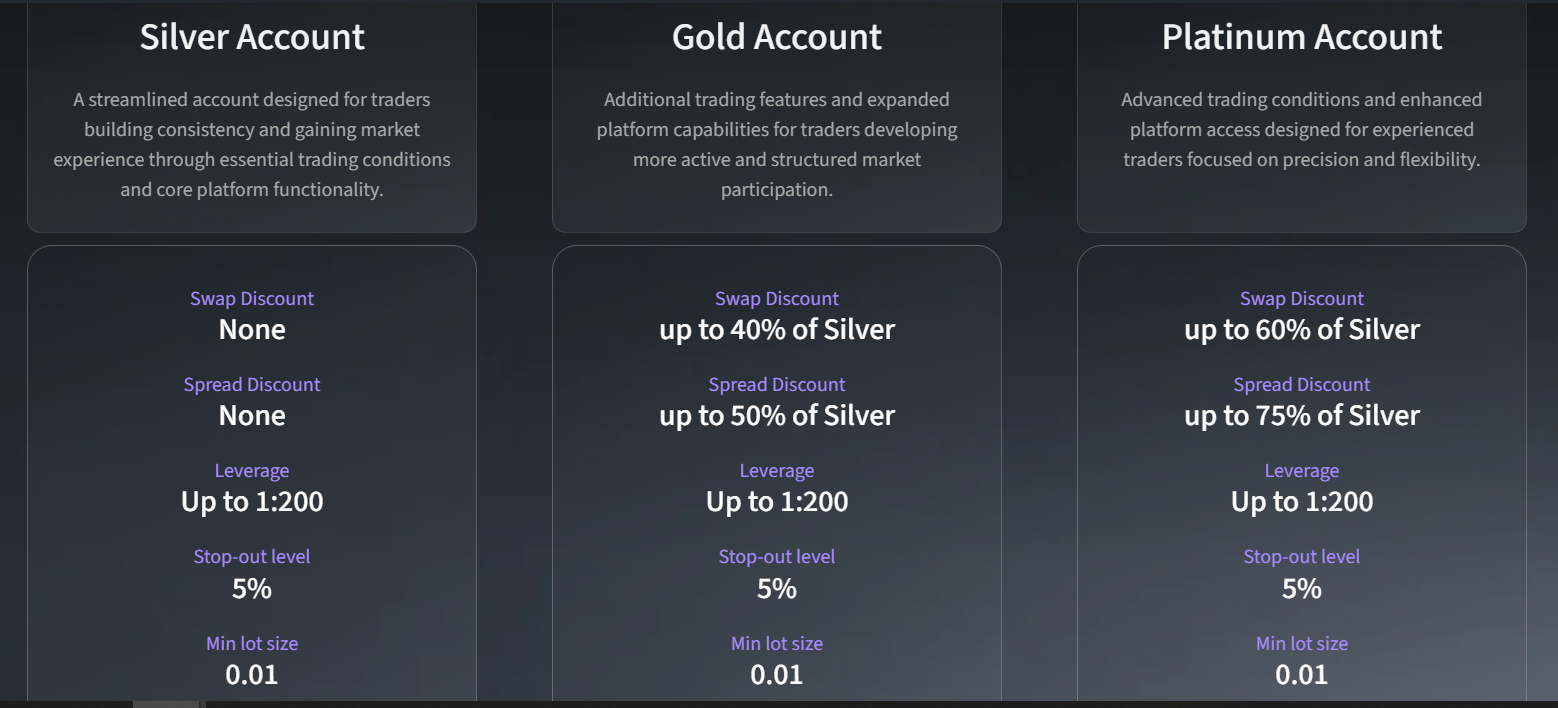
We then proceeded to assess the data we had obtained in greater detail. Let’s be direct: leverage of 1:200 creates an extremely high level of risk for retail traders and goes well beyond the levels generally considered acceptable for this category of clients. For comparison, retail investors in the United Kingdom, the EU, and Australia are allowed to use significantly lower leverage. For major currency instruments, the benchmark is 1:30, while higher leverage is available to professional clients. To obtain professional status, a trader must meet several fairly strict criteria.
And even with this limitation in place, statistics remain far from optimistic: more than 80% of retail market participants lose the funds they invest. Now imagine what happens when a trader is given the opportunity to use leverage of 1:200 instead of 1:30. We specifically draw our readers’ attention to this point: higher leverage does not automatically make trading more profitable. It simply allows traders to open a significantly larger position relative to their own capital. Accordingly, an adverse market movement can increase losses just as quickly.
Another parameter that we recommend not overlooking is the Stop-Out level. At HighMarkets, it is set at just 5%. This means that after the entire deposit has been used as margin and the market moves against the trader, by the time the position is forcibly liquidated, only 5% of the original amount remains. For the client, this represents an extremely harsh scenario. After such an operation, the remaining funds may not even be sufficient to open another position, meaning that the only way to continue trading would be to make another deposit.
The differences between the individual account types are primarily reflected in the size of spreads and swaps. On the Gold account, these are 50% and 40% lower than the corresponding Silver figures, respectively, while the Platinum account offers discounts of 75% on spreads and 60% on swaps. On paper, this looks quite attractive. However, a perfectly logical question arises here: what exact base values are these percentages calculated from?
If the original spread value is not disclosed, the discount itself tells us very little. A hypothetical 50% reduction may look impressive, but it does not necessarily mean that the final trading cost will be competitive. This is precisely why we always recommend that readers focus not on the advertised discount, but on the actual trading costs they will ultimately have to pay.
HighMarkets has published more detailed parameters in a document called Contract Specifications, which is available on the Company – Legal page. This is where a potential client finally gains access to substantially more useful information. The document specifies:
- Margin requirements, which make it relatively easy to determine the actual leverage available for each trading instrument.
- Minimum and maximum contract sizes expressed in standard lots.
- The size of one standard lot.
- The minimum price increment.
- Swap rates for long and short positions on the Silver account.
- Trading hours.
The amount of information disclosed is indeed fairly substantial. At this stage, we can say that the trading conditions are presented in considerably greater detail than those of many offshore competitors. However, the issue is still not completely resolved. And here, we have at least two serious concerns:
- Margin requirements differ for retail and professional traders. For retail clients, the specified margin is 3.33%, corresponding to leverage of 1:30, while for professional clients it is 0.05%, corresponding to 1:200. This raises a question for the broker itself: why do the account description pages effectively offer clients the same opportunity to use leverage of up to 1:200? How is a trader’s status determined? Who qualifies as a professional client? What requirements must be met? Are the project’s owners really leaving inexperienced traders with the option of using professional-level leverage, despite knowing that beginners often lack adequate risk-management skills? If that is not the case, the company could simply explain the client categorization process in detail. However, we were unable to find any such information.
- Why are the base spread values missing from the specification? If the broker offers such substantial discounts, it would be logical to show clients the original figures from which those discounts are calculated. Otherwise, it is impossible to verify how attractive the advertised offer actually is. It is entirely possible that even after the discount is applied, the resulting spreads are not as competitive as the platform’s representatives attempt to portray them.
Checking Compliance with Legitimate Rules
In the website footer, the Client Agreement, and the About Us page, the broker states that its operations are conducted under the management of DXA SEYCHELLES LIMITED. According to the information provided, the company is registered in Seychelles and holds a Securities Dealer license issued by the local financial regulator, the Financial Services Authority (FSA).
Naturally, we did not simply take these claims at face value and instead verified them against official registers. This is a fundamental point for our review: information published directly by the broker should be supported by an independent source.
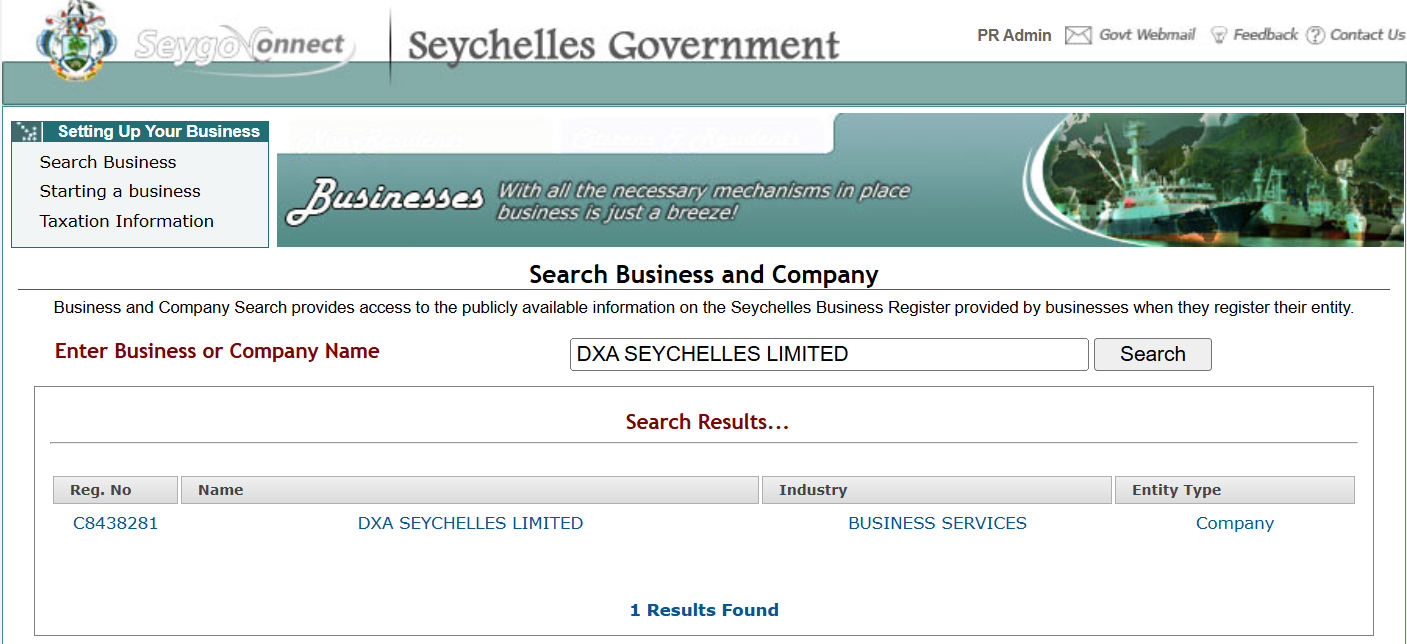
A check of the business registry confirmed the existence of entry No. C8438281 for DXA SEYCHELLES LIMITED. The information listed in the registry corresponds to the details published on the platform’s website.
We then separately verified the company’s licensing status through the FSA of Seychelles register.
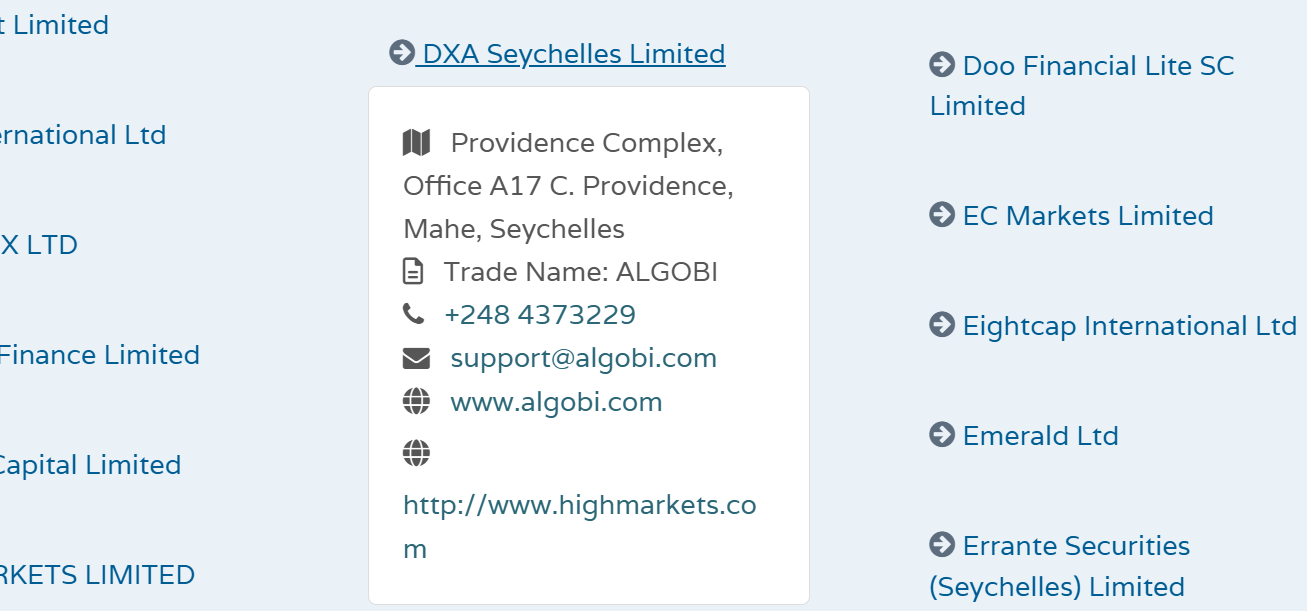
The result was unambiguous: the company does indeed hold a Securities Dealer license. Moreover, the registration record states that the company uses highmarkets.com in its operations.
Thus, key information about the legal entity and the existence of its regulatory authorization has been confirmed. Formally, this means that the broker is indeed registered in Seychelles and operates within the framework of local legislation.
But does this answer the main question — can the broker be trusted? Of course not. We have already examined the level of protection provided by the Seychelles license and explained to our readers why a Tier 2 regulatory authorization should not be viewed as a guarantee that client funds are safe. Therefore, verified registration is a positive factor, but it does not eliminate the need to assess the other risks involved.
How Long Has HighMarkets Been Around?
The history of the project interests us no less than its license and trading conditions. First and foremost, we need to establish when exactly the broker began operating and whether it has been present in the market long enough to earn traders’ trust.
Unfortunately, the owners of HighMarkets did not consider it necessary to disclose the broker’s launch date to potential clients. Therefore, we had to turn to publicly available sources and reconstruct the timeline ourselves.
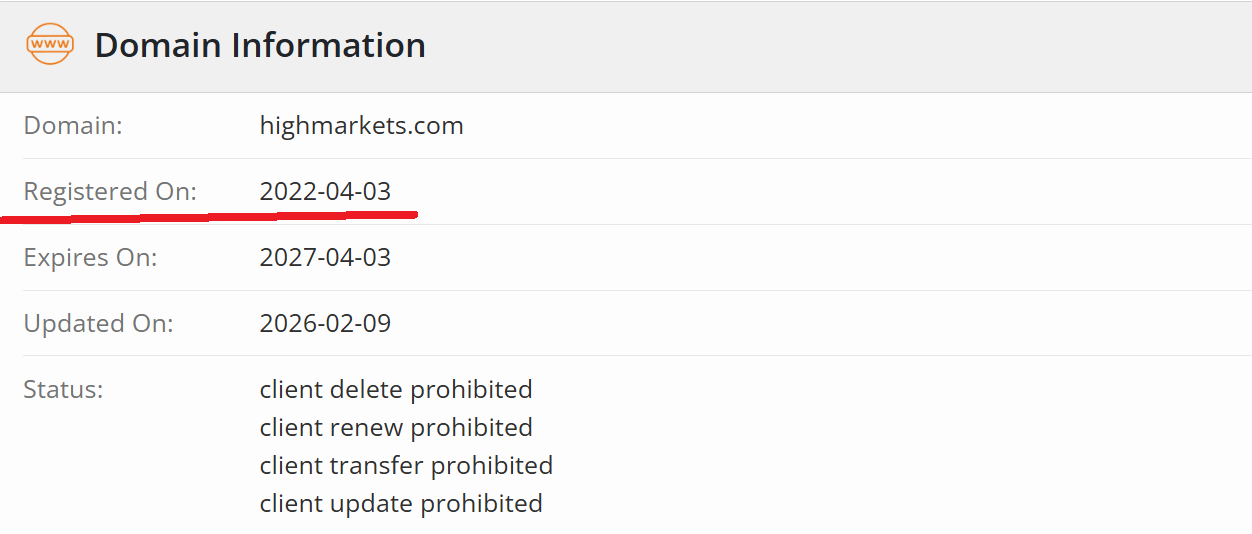
WHOIS data shows that the highmarkets.com domain was registered back in April 2022. At first glance, this would suggest that the domain is already more than four years old. But can we conclude from this that the broker itself has been operating for the same amount of time? Obviously not.
First, such a long-standing online presence should have left a much more noticeable digital footprint. Second, independent archival data allows us to check whether an active website actually existed throughout this entire period.
We are confident that the website only appeared in the summer of 2026, meaning that at the time our highmarkets.com review was prepared, the platform had been operating for no more than one or two months.
This is highly significant to us. Four years and a couple of months are simply not the same thing. It is impossible to build a fully established broker that has earned the necessary level of trust in such a short time.
Platform and Support Overview
We are already familiar with the HighMarkets trading terminal. A similar interface is used by several brokers, including quite a few projects that display clear signs of being scams.
At first glance, the software looks quite attractive. The interface is modern, and the range of basic features cannot be described as particularly weak. However, there is little reason to be surprised: the terminal is built around a TradingView price-chart widget. It provides a substantial portion of the analytical functionality and gives users access to a wide range of technical indicators and drawing tools.
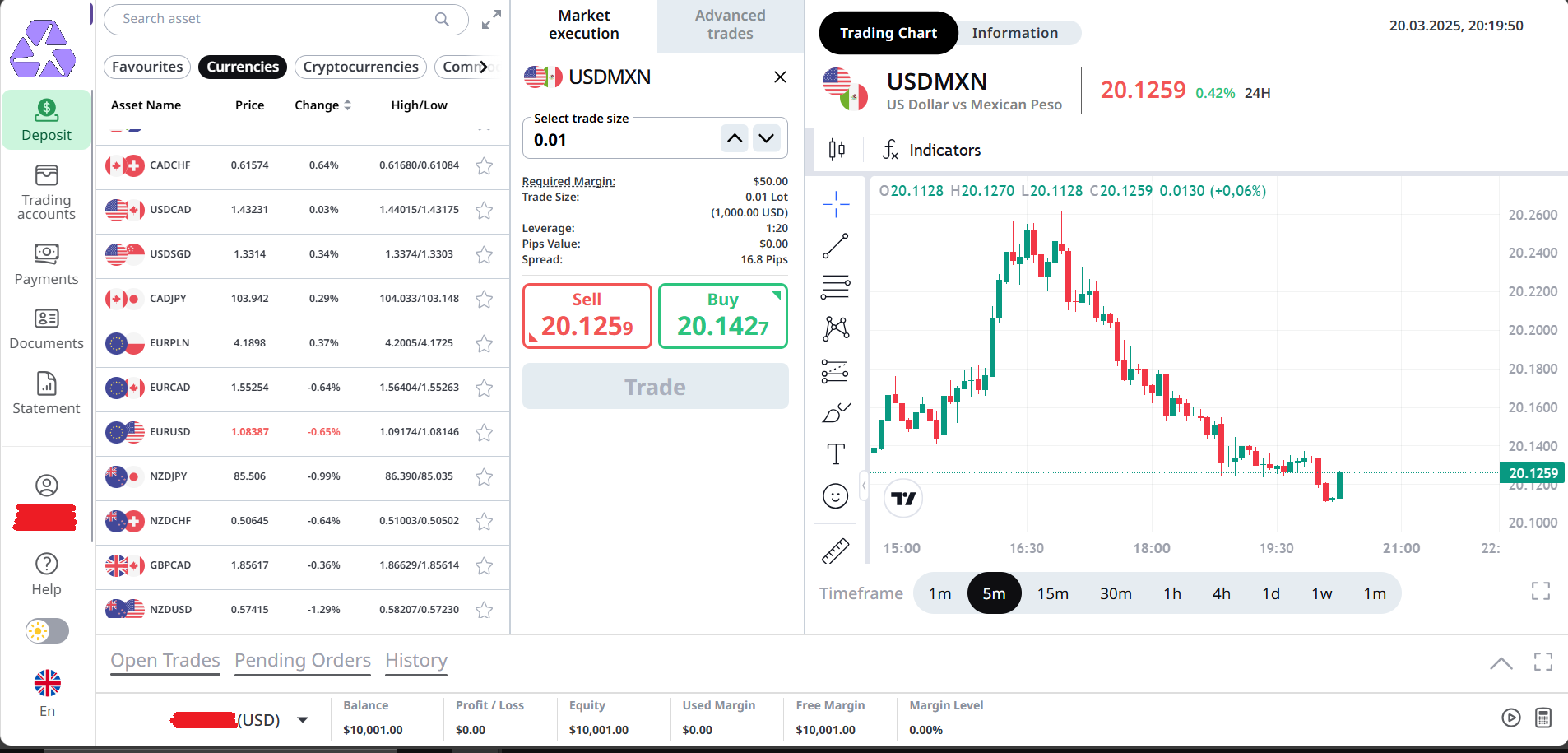
But let’s separate the capabilities provided by the TradingView widget itself from what the broker has actually developed. Once we do that, the picture becomes considerably less appealing. The resulting platform has quite a few shortcomings:
- A full multi-chart mode is not available.
- One-click trading is not supported.
- Workspace customization is limited: users can resize individual windows, but they cannot freely arrange them according to their own preferences.
- The market overview is inconveniently implemented, particularly when it comes to quickly finding the assets you need.
- There is no option to connect third-party indicators or trading robots.
These are just the limitations that become apparent during an initial examination of the platform. An experienced trader will quickly understand how significantly they can affect practical trading. For example, the lack of a proper multi-chart mode is inconvenient for those who monitor several assets simultaneously. Limited workspace customization forces traders to adapt their trading system to the terminal rather than the other way around. And the lack of automation completely rules out a number of trading strategies.
The situation is considerably better when it comes to contact and support information. The website creators have prepared several dozen questions and answers on the Support Hub page, covering a substantial portion of the standard issues users may encounter.
However, we would not recommend completely giving up on direct communication with the support team. The Contact Us page on the HighMarkets website provides:
- Support phone numbers in several countries across South and Latin America, the Middle East, and the Asia-Pacific region.
- A contact form.
- An email address.
In addition, an online chat is available on every page of the website. At first glance, the range of communication channels appears to be quite decent. The company has even taken care to establish a presence on social media. However, here we once again find another, albeit indirect, indication of how young the project is: the profiles only appeared in the summer of 2026.
Online Reputation: What We Found
There is one more important factor to assess — how well known HighMarkets is online and what real users have to say about it.
The result was quite predictable: there are currently no user reviews of the platform on Trustpilot or other similar portals. This is hardly surprising — a broker that has only been around for a couple of months could not realistically have built a substantial audience of clients willing to share their experiences.
The situation is somewhat different on specialized resources. The project has been discussed on both WikiFX and FastBull, as well as on several other websites covering trading and investing.
Conclusion: Risks and Reliability of HighMarkets
We have tried to make our HighMarkets review as comprehensive and objective as possible. Based on our findings, the conclusion is not difficult to draw: this broker does not deserve our trust. Although it is officially registered and operates under a license, there are no grounds to assume that its offshore activities are legally recognized and permitted in most countries. Its trading conditions raise questions, as does the quality of its trading terminal. Add to this the fact that the project appears to be only 1–2 months old, along with the mixed ratings from experts. From our perspective, this is more than enough reason not to take the risk of choosing this project for trading on the financial markets.
Sources
Seychelles FCA Securities Dealer Act 2024.