

Our today’s Chilli Markets review introduces a Forex/CFD broker that claims to offer traders everything they need to trade with confidence. This includes full regulatory compliance, a modern trading platform, competitive trading conditions, and professional support. Such promises may sound appealing to many traders. However, we decided to take a closer look and find out whether this is just another scam project trying to attract new clients and steal their money. Read on to discover what we found.
Contents
- Key Points to Know
- What Stands Out About the Chillimarkets.com Website
- Inside the Offshore Registration of Chilli Markets
- Trading Conditions Explained
- Checking Compliance with Legitimate Rules
- How Long Has Chilli Markets Been Around?
- Platform and Support Overview
- Online Reputation: What We Found
- Conclusion: Risks and Reliability of Chilli Markets
- Sources
Key Points to Know
| Main Website | https://chillimarkets.com/ |
| Additional Domains | https://chilli.awovedev.com/ |
| Online Since | 2026/03/14 |
| Legal Entity Name | Credence Capital (Pty) Ltd (South Africa), Pharos Markets Ltd (Mauritius) |
| Pretended to Be Regulated | FSCA (South Africa), FSC of Mauritius |
| Fact-Checked Regulation | FSCA (South Africa), FSC of Mauritius |
| Deposit to Start Trade | $250 |
| Leverage up To | 1:500 |
| Spreads From | Unknown |
What Stands Out About the Chillimarkets.com Website
-
The broker provides information about its official registration and claims to hold licenses from several regulatory authorities, making it appear attractive to potential traders.
-
The minimum deposit of just $250 is affordable for virtually any trader.
-
There are reasonable doubts as to whether at least one of the two purported licenses actually belongs to this broker, rather than having been copied from a public register or acquired for next to nothing along with the company documents.
-
The trading conditions can hardly be described as attractive. Leverage of 1:500 exposes traders to substantial risks, while spread and swap rates are not disclosed at all.
-
The official website provides very little genuinely useful information.
-
The trading software is far from the best option available to brokers.
-
There are no objective reviews online, only positive comments published on untrusted websites.
Inside the Offshore Registration of Chilli Markets
At first glance, the broker managed to surprise us. It claims to be officially registered in South Africa and Mauritius and to hold licenses from both regulatory authorities: South Africa’s FSCA and Mauritius’s FSC. Both jurisdictions are recognized offshore financial centers.
In general, the Financial Sector Conduct Authority of South Africa (FSCA) is regarded as a reputable regulator whose licenses deserve a degree of trust. This reputation stems from the strict requirements imposed on companies seeking authorization, including verification of management qualifications, sufficient capital, and an effective risk management system. The regulator also actively protects clients’ rights through requirements such as holding client funds in segregated accounts, monitoring broker activities, and maintaining a transparent public register.
These factors create certain opportunities for scam platforms, particularly those claiming to offer Forex/CFD trading. However, the regulator has taken steps to improve the situation.
In 2018, South Africa adopted the Financial Markets Act Regulations, 2018, which were fully implemented in 2024–2025. These regulations also introduced Conduct Standard 1 of 2018 (official document). The former introduced the concept of an ODP (Over-the-Counter Derivative Provider), while the latter established the criteria for lawful operations by such providers. Under these documents, dealers and market makers that act as the sole counterparties to their clients’ transactions and deal in OTC derivatives — including CFDs and cryptocurrency CFDs — must obtain an additional ODP (Over-the-Counter Derivative Provider) license alongside their FSP authorization. Furthermore, as of 2026, local authorities intend to tighten oversight of these companies.
Probably, it was the tightening of South African regulations that prompted Chilli Markets to obtain a second license, this time from Mauritius. However, we would not go so far as to say that a broker licensed by the FSC of Mauritius deserves complete trust. The reason is that the requirements imposed on companies providing brokerage and dealing services in this jurisdiction are considerably more lenient than those in Europe, for example.
- The minimum capital requirement is significantly lower. A Full Service Dealer without underwriting, which is the category relevant to our case, must maintain capital of MUR 1,000,000 (approximately USD 22,000). By comparison, CySEC requires EUR 730,000, the FCA requires GBP 730,000, and ASIC requires AUD 1,000,000.
- Licensing fees are relatively low. The one-time fee payable when obtaining a license does not exceed MUR 100,000 (approximately USD 2,200), while the annual renewal fee is MUR 290,000 (around USD 6,500).
- License holders can provide a wide range of financial services. These include trading in securities and derivatives (including CFDs), portfolio management, offering PAMM/MAM accounts, investment advisory services, proprietary trading, and more.
- The FSC does not impose restrictions on trading conditions, including leverage. A broker can set leverage at any level, provided the terms are specified in the client agreement.
- Client fund segregation and compensation schemes are not mandatory. Firms are not necessarily required to segregate client funds, participate in deposit compensation schemes, or implement other measures designed to ensure comprehensive protection of traders’ rights.
Thus, the main challenge for a broker choosing Mauritius as its place of registration and licensing is obtaining the necessary authorization documents. Once licensed, it can conduct its business with relatively little regulatory interference and few restrictions. This is precisely what attracts scammers to the jurisdiction. The licensing hurdle is not particularly difficult to circumvent: a company can simply acquire or rent a local firm that already holds the necessary documents or is ready to obtain them.
Trading Conditions Explained
Visitors to the website will find only the trading conditions published on the account types page or displayed on the homepage. The problem is that Chilli Markets provides virtually no other information about its trading parameters. For example, we expected the Markets page to contain not only a list of available markets but also a list of trading instruments with at least some basic contract specifications. Instead, the broker’s specialists chose to limit the content to a list of asset classes, each accompanied by a description of just one sentence. We could not find any contract specifications on the website either.
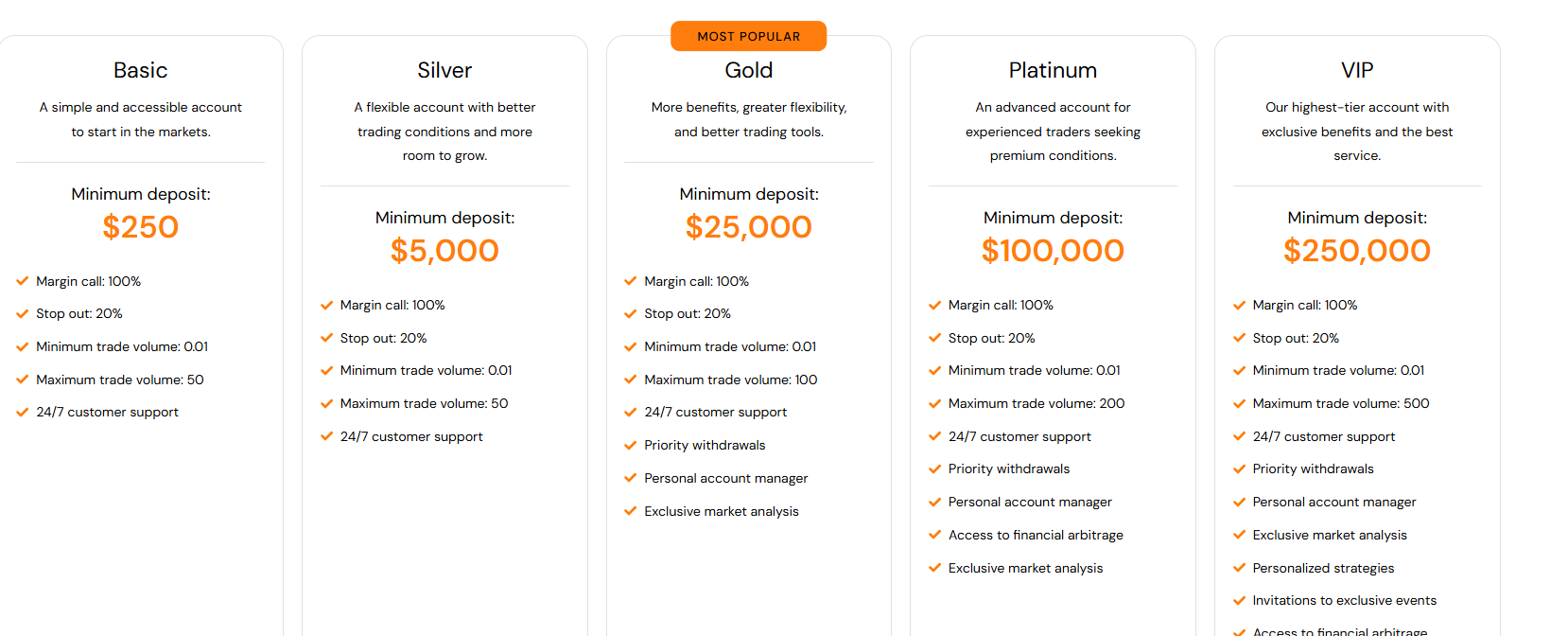
However, the account types table provides more details. Here, the company lists the minimum deposit amounts, leverage ratios, minimum and maximum trade volumes, and Margin Call and Stop Out levels for each account. There are five account types in total:
- Basic requires an initial deposit of $250, offers leverage of up to 1:200, and allows a maximum trade size of 50 lots.
- Silver requires a minimum deposit of $5,000, offers leverage of up to 1:400, and allows trades of up to 20 standard lots.
- Gold requires a deposit of at least $25,000, offers leverage of up to 1:500, and allows individual trades of up to 100 lots.
- Platinum requires a minimum balance of $100,000, offers maximum leverage of 1:500, and allows trades of up to 200 lots.
- VIP available to clients depositing $250,000. It offers flexible leverage, with no maximum ratio specified, and allows trades of up to 500 standard lots.
The other parameters are the same across all account types: the Margin Call level is 100%, the Stop Out level is 20%, and the minimum trade size is 0.01 standard lots.
Overall, the amount of information provided is not insignificant. However, first, it is still insufficient to make a fully informed decision about trading with Chilli Markets. Second, the published terms raise quite a few questions. Let’s start with leverage. The maximum leverage is 1:200 on Basic accounts and 1:400 on Silver accounts, while Gold and Platinum accounts offer leverage of up to 1:500. The VIP account description states that leverage is “Negotiable,” without specifying the maximum ratio the broker might offer.
Such leverage is available only when trading Forex pairs (we wonder whether this also applies to cross-currency pairs), while lower ratios apply to other asset classes. In any case, the company’s offerings exceed the levels that reputable regulators, such as the UK’s FCA and Australia’s ASIC, consider relatively safe for retail clients in terms of risk exposure. For example, the European Securities and Markets Authority (ESMA), in its official document on CFD and binary options restrictions, sets the maximum leverage for trading major currency pairs at 1:30. European regulatory statistics indicate that even under these conditions, 75%–85% of retail traders lose their money.
At the broker we are reviewing, leverage can be almost 10 times higher, significantly increasing the level of risk. How many of the company’s clients do you think will lose their funds, and how quickly will it happen? The situation is even worse when it comes to the information needed to calculate trading costs: there is none at all.
Let’s also say a few words about the minimum deposit requirements. The only account with an entry-level amount affordable for most traders is Basic, at $250. Beyond that, the required deposits increase dramatically. For example, the next tier, Silver, requires a deposit 20 times higher. At the same time, leverage increases with the deposit amount, further raising the level of risk. The logic behind this approach is fairly clear: the more money a trader deposits, the more the broker stands to gain if that money is lost quickly. However, this kind of approach is characteristic of scam operations, not companies that intend to conduct business honestly.
Checking Compliance with Legitimate Rules
We have already mentioned that Chilli Markets is trying to convince traders that it is officially registered, operates entirely legally, and holds a license to provide the relevant financial services. To support these claims, the broker even publishes its registration and license numbers in the South African and Mauritian registers.
We have no objection to trusting this information. However, we naturally decided to verify it first. We began with the register of South Africa’s financial regulator, since the client agreement is offered to traders in the name of a company registered in that country.
According to the broker, the platform belongs to Credence Capital (Pty) Ltd, a company officially registered in South Africa and authorized as an FSP (Financial Services Provider) by the local regulator, the Financial Sector Conduct Authority of South Africa (FSCA), under license number 53882.
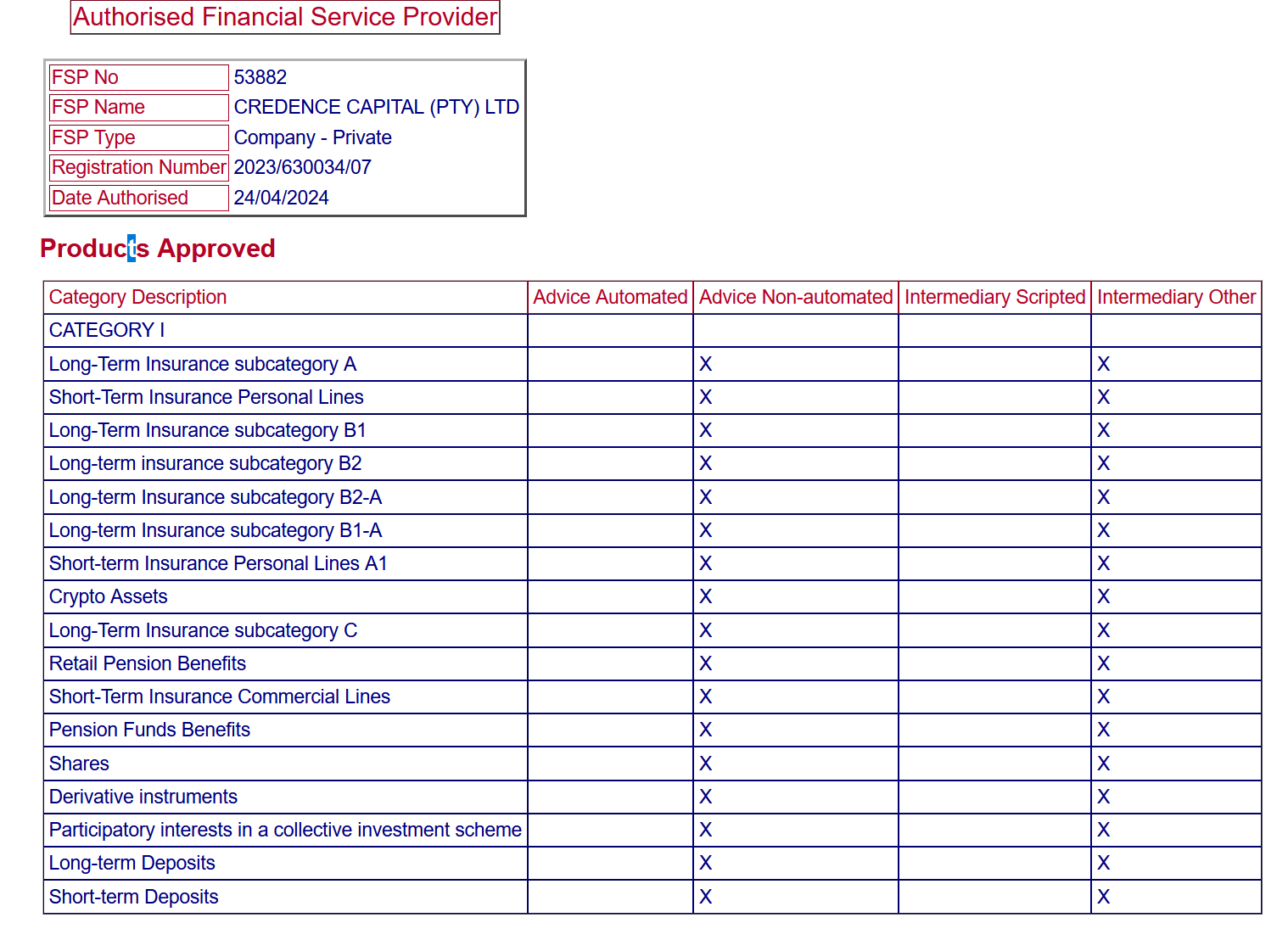
As we can see, checking the FSCA records confirmed the information published on the broker’s official website. Credence Capital (Pty) Ltd does indeed exist in South Africa. It was registered in July 2023 under company number 2023/630034/07 and authorized by the regulator in April 2024 as FSP No. 53882.
According to the FSCA, a Category 1 license holder is authorized to provide brokerage and investment advisory services relating to various deposits, securities, futures contracts, and financial derivatives.
Does this mean the broker is genuinely operating legally under a valid license? We would not rush to that conclusion. As we have already explained, companies registered in South Africa now need more than just FSP authorization to legally provide Forex/CFD trading services. If such a company acts as the sole counterparty to its clients’ trades, it must also hold an ODP license. As we can see, Chilli Markets does not even mention using STP or ECN technology, nor does it claim to offer products on behalf of another legal entity. Therefore, we have every reason to consider it a full-fledged dealer, for which ODP authorization is mandatory.
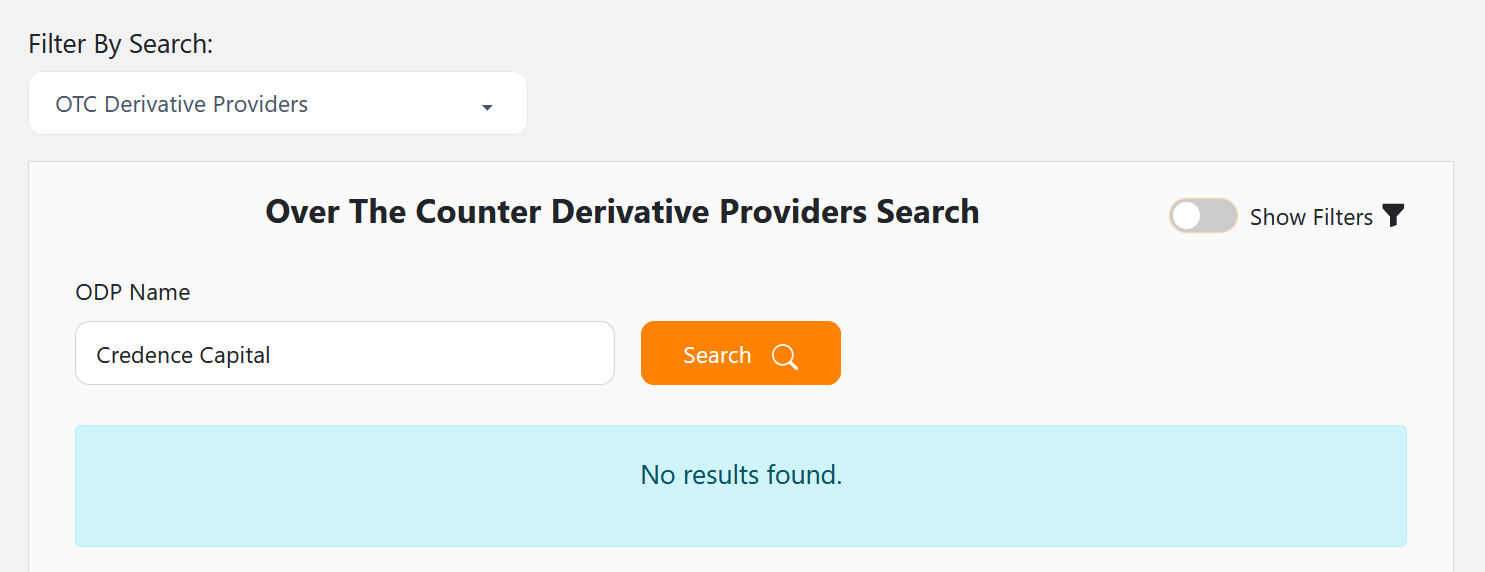
However, as the search results show, no matching record was found in the FSCA database. This indicates that Credence Capital (Pty) Ltd does not hold an ODP license.
Another possibility is that the project’s creators purchased or rented an existing company with a complete set of registration documents and authorizations. In either case, we believe we are dealing with a scam platform. Of course, we understand that readers may ask about the second company allegedly operating the broker. According to Chilli Markets, this entity is registered in Mauritius and holds a license issued by the local financial regulator, the FSC. Naturally, we checked these claims as well.

Our search of Mauritius’s business register was successful. Pharos Markets Ltd is listed under company number C197464, having been registered in May 2023, and is currently active. However, there is one important detail: the company was previously known as Elite H Co Ltd. The register provides no information about when or why the name was changed.
The information regarding its regulatory status also proved accurate. The company has held an Investment Dealer (Full Service Dealer excluding Underwriting) license since May 31, 2023.

Neither register specifies a trading name or the website through which this company conducts its business. Furthermore, the name Chilli Markets matches neither the company’s former nor its current legal name. In this case, we could also suspect that the platform’s owners simply copied the company’s details from public registers. However, we consider it more plausible that they purchased or rented an existing legal entity. We also suspect that its beneficial owners may be familiar with such arrangements, especially considering that the company has already changed its name once. We hope that examining the broker’s history will help shed some light on the situation.
How Long Has Chilli Markets Been Around?
A closer look at the platform’s history only raised further suspicions. According to the WHOIS service, the domain chillimarkets.com was registered on March 14, 2026.

Judging by the date of the last significant modification, the website in its current form has been operating since August 2026. However, the exact distinction is not particularly important here. What we can see is that the broker began offering its services only in the spring or summer of 2026, whereas the records of the companies allegedly operating it date back to 2023–2024.
We mentioned the website’s current state for a reason. Although the broker refers to chillimarkets.com on its pages, the actual website is hosted at chilli.awovedev.com. The .com domain simply redirects visitors to that address.
Platform and Support Overview
Even a look at Chilli Markets’ trading platform told us quite a lot. The reason is simple: we have seen this software many times before, and most brokers using it are difficult to describe as trustworthy.
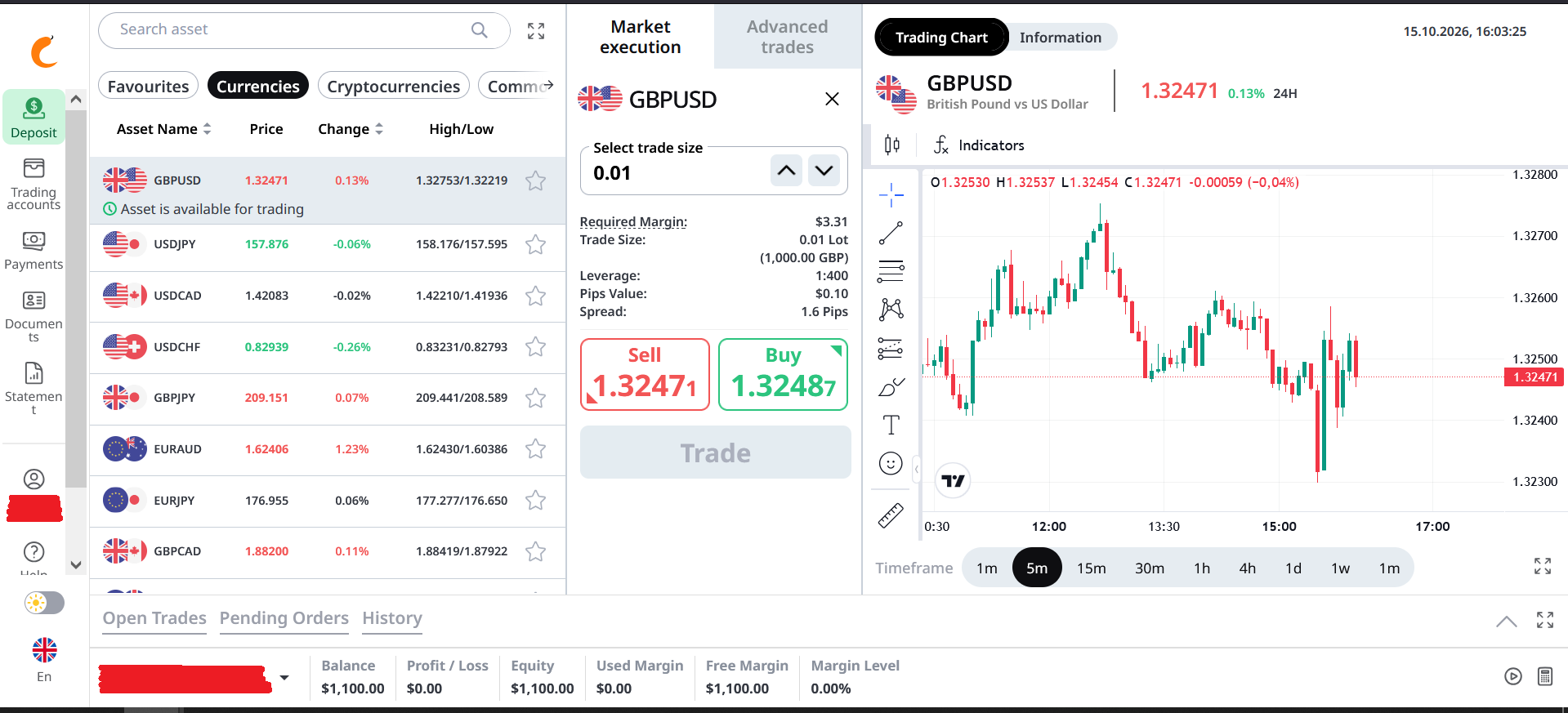
Visually, the Chilli Markets trading platform makes a fairly positive first impression. The interface looks modern, and the available tools appear reasonably comprehensive. This is hardly surprising, given that the platform is built around the TradingView charting widget. It provides a substantial portion of the analytical functionality, including a range of technical indicators and drawing tools needed to analyze market movements.
However, beneath this attractive exterior lie several limitations that could prove significant for active traders:
- No full multi-chart functionality. The platform does not offer a fully featured multi-chart layout.
- No one-click trading. Opening a position requires additional steps, and in fast-moving markets, those extra seconds can matter.
- Limited workspace customization. As a result, traders cannot fully tailor the interface to their individual trading strategies.
- No support for third-party indicators or trading robots. This restricts opportunities to expand analytical capabilities and automate trading operations.
These shortcomings are apparent even during an initial review of the platform, but their impact becomes much more obvious in live trading.
We were equally disappointed by Chilli Markets’ contact information. The Contact Us page provides only an address in South Africa, a customer support email address, and a contact form.
The absence of a telephone number at a modern company seems rather strange. Apparently, the broker believes that an online chat is sufficient for prompt communication with clients and users. Oddly enough, however, we never received a response from a support agent. Its social media presence is equally disappointing. Links to social media profiles appear on the website, but they lead nowhere.
Online Reputation: What We Found
As expected, the broker’s online reputation also leaves much to be desired. To begin with, we could not find a single chillimarkets.com review on reputable platforms such as Trustpilot. However, the broker receives overwhelmingly positive praise on lower-tier review websites such as hellopeter.com and trustindex.io. This is hardly surprising: publishing fake positive comments is considerably easier on such platforms.
Experts at specialized financial portals, however, have reached a different conclusion. For example, WikiFX has assigned the broker a rating of just 1.63 out of 10 and also questions whether its regulatory licensing has been verified. From our perspective, this assessment appears reasonable.
Conclusion: Risks and Reliability of Chilli Markets
Our Chilli Markets review has clearly shown why this broker should not be trusted. Just look at the official records: the companies and their licenses date back three to four years, while the broker itself only began operating in 2026. This is a clear red flag, as are its trading conditions, suspiciously positive reviews, and contact details. Taken together, these are warning signs of a potential scam in which traders risk losing their money.



30.10.2026 at 18:42
A typical scam!
I chose Chilli Markets because of its attractive website and promises of favorable trading conditions. I deposited USD 25000 into a Gold account. To be honest, the spreads were enormous, and the swap fees were simply outrageous. As a result, every trade started with a substantial loss, making it extremely difficult to turn a profit. When I tried to withdraw at least part of my deposit, the account managers demanded that I add more funds to my balance, claiming that otherwise, a withdrawal would be impossible. After I refused, my account was frozen, and customer support stopped responding. This is a TYPICAL SCAM: they take your money and then simply abandon you.